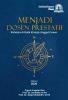
MENJADI DOSEN PRESTATIF: Rahasia di Balik Kinerja Unggul Dosen
Keywords:
Kinerja Dosen, Dosen Prestatif, Profesionalisme Dosen, Pengembangan Karier Akademik, Keunggulan Pendidikan TinggiSynopsis
Menjadi dosen bukan sekadar mengajar di ruang kelas, melainkan menginspirasi, meneliti, mengabdi, dan menciptakan perubahan yang berdampak bagi masyarakat. Namun, mengapa sebagian dosen mampu mencapai prestasi luar biasa, sementara yang lain hanya menjalankan rutinitas? Buku Menjadi Dosen Prestatif: Rahasia di Balik Kinerja Unggul Dosen mengupas berbagai faktor yang membentuk kinerja unggul dosen secara mendalam dan praktis.
Melalui pembahasan yang ringan namun berbasis realitas dunia pendidikan tinggi, buku ini mengajak pembaca memahami hubungan antara budaya kerja, kepuasan kerja, penjaminan mutu, serta perilaku kerja prestatif. Penulis menunjukkan bahwa keberhasilan dosen tidak hanya ditentukan oleh kompetensi akademik, tetapi juga oleh sistem dan ekosistem kampus yang mampu mendorong lahirnya inovasi, kolaborasi, integritas, serta semangat untuk terus berkembang.
Ditujukan bagi dosen, calon dosen, pimpinan perguruan tinggi, pengelola yayasan, hingga pemerhati pendidikan, buku ini menawarkan wawasan, refleksi, dan peta jalan praktis untuk membangun kampus yang unggul. Sebuah bacaan yang menginspirasi bagi siapa saja yang percaya bahwa pendidikan tinggi yang berkualitas berawal dari dosen-dosen yang prestatif.
References
Abdillah, W., & Hartono, J. (2015). Partial Least Square (PLS): Alternatif Structural Equation Modeling (SEM). Andi.
Ali, M. (2000). Sistem penjaminan mutu dalam manajemen mutu pendidikan. Jurnal Mimbar Pendidikan, XIX(1), 28–31.
Ansah, F. (2015). A strategic quality assurance framework in an African higher education context. Quality in Higher Education, 21(2), 132–150. https://doi.org/10.1080/13538322.2015.1084720
Aris, A. A., Wardhana, A., Mapata, D., Rachmawaty, R., & Hartini, H. (2024). Peran kompetensi, lingkungan kerja, dan locus of control dalam meningkatkan kepuasan kerja guru. PERSPEKTIF, 13(2), 401–412.
Atmanti, H. D. (2005). Investasi sumber daya manusia melalui pendidikan. Dinamika Pembangunan, 2(1), 30–39.
Baard, P. P., Deci, E. L., & Ryan, R. M. (2004). Intrinsic need satisfaction: A motivational basis of performance and well-being in two work settings. Journal of Applied Social Psychology, 34(10), 2045–2068.
Bass, B. M. (1996). New paradigm of leadership: An inquiry into transformational leadership. US Army Research Institute for the Behavioral & Social Sciences.
Bastedo, M. N. (2012). The organization of higher education: Managing colleges for a new era. JHU Press.
Bateman, T. S., & Organ, D. W. (1983). Job satisfaction and the good soldier: The relationship between affect and employee citizenship. Academy of Management Journal, 26(4), 587–595.
Ben Saad, G., & Abbas, M. (2018). The impact of organizational culture on job performance: A study of Saudi Arabian public sector work culture. Problems and Perspectives in Management, 16(3), 207–218.
Bleiklie, I., & Kogan, M. (2007). Organization and governance of universities. Higher Education Policy, 20(4), 477–493.
Borman, W. C., & Motowidlo, S. J. (1997). Task performance and contextual performance: The meaning for personnel selection research. Human Performance, 10(2), 99–109.
Brennan, J., & Shah, T. (2000). Managing quality in higher education: An international perspective on institutional assessment and change. OECD, SRHE & Open University Press.
Cardoso, S., Rosa, M. J., Videira, P., & Amaral, A. (2017). Internal quality assurance systems: "Tailor made" or "one size fits all" implementation? Quality Assurance in Education, 25(3), 329–342.
Chen, Z. (2018). Job satisfaction among frontline police officers in China: The role of demographic, work-related, organizational and social factors. Psychology, Crime and Law, 24(9), 895–914.
Covey, S. R. (1991). Principle-centered leadership. RosettaBooks LLC.
Daromes, F. E. (2016). Strengthening beliefs systems on the development and implementation internal quality assurance systems on higher education. Dalam C. Coleman (Ed.), Quality assurance: Analysis, methods and outcomes (hlm. 69–80). Nova Science Publishers.
De Boer, H., Enders, J., & Schimank, U. (2007). On the way towards new public management? The governance of university systems. Dalam D. Jansen (Ed.), New forms of governance in research organizations (hlm. 137–152). Springer.
Deem, R., Hillyard, S., & Reed, M. (2007). Knowledge, higher education, and the new managerialism. Oxford University Press.
Deming, W. E. (2002). Out of the crisis. MIT Press.
Estes, B., Polnick, B., & Polnick, B. (2012). Examining motivation theory in higher education: An expectancy theory analysis of tenured faculty productivity. International Journal of Management, Business, and Administration, 15(1).
Falchikov, N., & Boud, D. (1989). Student self-assessment in higher education: A meta analysis. Review of Educational Research, 59(4), 395–430.
Ferdian, G. A., Septyarini, E., & Herawati, J. (2023). Pengaruh kompensasi, motivasi dan lingkungan kerja terhadap kepuasan kerja guru serta staff tata usaha. Swabumi, 11(1), 63–72.
Ferdinal, A. (2022). Budaya organisasi dan disiplin kerja terhadap kinerja dosen melalui motivasi kerja sebagai variabel intervening. Journal of Business and Economics (JBE) UPI YPTK, 7(1), 85–90.
Gibson, J. L., Ivancevich, J. M., Donnelly, J. H., & Konopaske, R. (2012). Organizations: Behavior, structure, processes (14th ed.). McGraw-Hill Irwin.
Gunawan, S. A., Rahmat, A., & Bastian, A. (2024). Hubungan budaya organisasi dan kepuasan kerja: Mekanisme perilaku pemimpin. Jurnal Bisnis Kompetitif, 3(1), 20–30.
Halim, J. B., & Yusianto, Y. (2023). Pengaruh kepemimpinan, kompensasi dan lingkungan kerja terhadap kepuasan kerja. Jurnal Manajerial dan Kewirausahaan, 5(3), 668–676.
Harvey, L. (2005). A history and critique of quality evaluation in the UK. Quality Assurance in Education, 13(4), 263–276.
Harvey, L., & Green, D. (1993). Defining quality. Assessment & Evaluation in Higher Education, 18(1), 9–34.
Hauptman Komotar, M. (2020). Discourses on quality and quality assurance in higher education from the perspective of global university rankings. Quality Assurance in Education, 28(1), 78–88.
Hengki Primayana, K. (2016). Manajemen sumber daya manusia dalam peningkatan mutu pendidikan di perguruan tinggi. Jurnal Penjaminan Mutu, 1(2), 7.
Herminingsih, A., & Saputra, R. D. A. (2025). Building quality culture of higher education by implementation of internal quality assurance system. Eduvest - Journal of Universal Studies, 5(1), 601–610.
Hersey, P., Blanchard, K. H., & Johnson, D. E. (1996). Management of organisational behaviour. Prentice-Hall International.
Hidayati, N., Utama, A., Mulyana, D., & Kusumawardana, A. (2024). Kewirausahaan di manajer UMKM Kabupaten Bogor: Peran budaya organisasi dan kepuasan kerja. Journal of Economic, Business and Accounting (COSTING), 7(6), 7014–7027.
Hodge, B. J., Anthony, W. P., & Gales, L. M. (2003). Organization theory: A strategic approach (6th ed.). Prentice Hall.
Iriani, S. S., & Tiarawati, M. (2018). University governance practice and student satisfaction to enhance student loyalty. Proceedings of the 31st International Business Information Management Association Conference, 4233–4242.
Iswati, I., & Ignatius, J. (2023). Pengaruh komitmen organisasi dan kepuasan kerja terhadap kinerja dosen swasta di Surabaya. Jurnal Simki Economic, 6(2), 279–287.
Jensen, M. C., & Meckling, W. H. (1976). Theory of the firm: Managerial behavior, agency costs and ownership structure. Journal of Financial Economics, 3(4), 305–360.
Junaidi, J., & Marantika, A. (2022). Analisis budaya kerja, lingkungan kerja, tunjangan kinerja dan pengaruhnya terhadap kepuasan kerja serta implikasi pada kinerja pegawai. ECo-Fin, 4(3), 143–160.
Juran, J. M. (1988). Juran on planning for quality. Collier Macmillan.
Khanna, P. (2017). A conceptual framework for achieving good governance at open and distance learning institutions. Open Learning, 32(1), 21–35.
Kreitner, R., & Kinicki, A. (2010). Organizational behavior. McGraw-Hill/Irwin.
Kularajasingam, J., Subramaniam, A., & Sarjit Singh, D. K. (2022). The role of competency: Comparing social intelligence and teaching and learning performance among academics staffs in Malaysian private higher education institutions. International Journal of Academic Research in Business and Social Sciences, 12(2).
Kurniawan, A. W., Tahir, T., Hamka, R. A., & Nurhaedah, N. (2023). Analisis lingkungan kerja dan kepuasan kerja dosen pasca berakhirnya PPKM. INOBIS: Jurnal Inovasi Bisnis dan Manajemen Indonesia, 6(4), 524–535.
Leidner, R. (2018). Work cultures. Dalam Routledge handbook of cultural sociology (hlm. 399–407). Routledge.
Locke, E. A. (1968). Toward a theory of task motivation and incentives. Organizational Behavior and Human Performance, 3(2), 157–189.
Locke, E. A., & Latham, G. P. (2002). Building a practically useful theory of goal setting and task motivation: A 35-year odyssey. American Psychologist, 57(9), 705–717.
Luthans, F. (2011). Organizational behavior: An evidence-based approach. McGraw-Hill Irwin.
Luthans, F., Avolio, B. J., Avey, J. B., & Norman, S. M. (2007). Positive psychological capital: Measurement and relationship with performance and satisfaction. Personnel Psychology, 60(3), 541–572.
Mangkunegara, A. P. (2017). Manajemen sumber daya manusia perusahaan. Remaja Rosdakarya.
Marnoto, M. (2022). Pengaruh kepuasan kerja terhadap komitmen organisasi. Jurnal Ekonomi Bisnis dan Manajemen (EKO-BISMA), 1(2), 111–115.
McClelland, D. C. (1961). The achieving society. Simon and Schuster.
Miller, R. I. (1974). Developing programs for faculty evaluation. Jossey-Bass Publishers.
Motowidlo, S. J., & Van Scotter, J. R. (1994). Evidence that task performance should be distinguished from contextual performance. Journal of Applied Psychology, 79(4), 475–480.
Mulyati, T. (2018). Pengaruh kompetensi, budaya akademik dan kepemimpinan spiritual terhadap motivasi dan implikasinya. EKUITAS (Jurnal Ekonomi dan Keuangan), 19(1).
Nemteanu, M.-S., & Dabija, D.-C. (2021). The influence of internal marketing and job satisfaction on task performance and counterproductive work behavior in an emerging market during the COVID-19 pandemic. International Journal of Environmental Research and Public Health, 18(7), 3670.
Ngirabakunzi, F., Ocan, J., & Adyanga, F. A. (2024). The impact of academic staff appraisals on job performance in Rwanda's private universities. East African Journal of Education Studies, 7(2), 243–254.
Noe, R. A., Hollenbeck, J. R., Gerhart, B. A., & Wright, P. M. (2017). Human resource management: Gaining a competitive advantage. McGraw-Hill Education.
Noly, N. H., Usman, U., Tulus, T. J., & Iswan, I. E. (2022). Sistem penjamin mutu internal dan eksternal pada lembaga pendidikan dasar. Multiverse: Open Multidisciplinary Journal, 1(2), 77–83.
Nurhasan, R., Wufron, W., & Rahmayani, R. (2022). Kepuasan kerja dosen tetap perguruan tinggi swasta. Jurnal Wacana Ekonomi, 21(3), 122–134.
Olowookere, E. I., Agoha, B. C., Omonijo, D. O., Odukoya, J. A., & Elegbeleye, A. O. (2021). Cultural nuances in work attitudes and behaviors: Towards a model of African work culture. Academic Journal of Interdisciplinary Studies, 10(2), 259.
Organ, D. W. (1988). Organizational citizenship behavior: The good soldier syndrome. Lexington Books.
Oyewole, Y. B., Olanipon, O. O., Olaleye, B. R., & Egwu, B. U. (2023). Impact of job satisfaction on the performance of non-academic staff of federal university Oye-Ekiti. African Multidisciplinary Journal of Development, 12(1), 45–59.
Paputungan, I., Ansar, A., & Mas, S. R. (2021). Keefektifan pelaksanaan sistem penjaminan mutu internal. PEDAGOGIKA, 77–92.
Peraturan Menteri Pendidikan Tinggi, Sains, dan Teknologi Nomor 39 Tahun 2025 tentang Penjaminan Mutu Pendidikan Tinggi.
Peraturan Menteri Pendidikan, Kebudayaan, Riset, dan Teknologi Nomor 53 Tahun 2023 tentang Penjaminan Mutu Pendidikan Tinggi.
Podsakoff, N. P., Whiting, S. W., Podsakoff, P. M., & Blume, B. D. (2009). Individual- and organizational-level consequences of organizational citizenship behaviors: A meta-analysis. Journal of Applied Psychology, 94(1), 122–141.
Podsakoff, P. M., MacKenzie, S. B., Paine, J. B., & Bachrach, D. G. (2000). Organizational citizenship behaviors: A critical review of the theoretical and empirical literature and suggestions for future research. Journal of Management, 26(3), 513–563.
Prokopenko, J. (1987). Productivity management: A practical handbook. International Labour Office.
Putra, A. R., & Sinambela, E. A. (2021). Pengaruh kepemimpinan dan komunikasi kerja terhadap kepuasan kerja dosen. Jurnal Simki Pedagogia, 4(1), 58–67.
Rahayu, A. P., Subagiyo, L., Rahayu, S. M., & Sjamsir, H. (2018). The principles of good university governance at Islamic Muhammadiyah University of East Borneo. Journal of Social Sciences Research, 4(10), 200–204.
Renko, M., Kroeck, K. G., & Bullough, A. (2011). Expectancy theory and nascent entrepreneurship. Small Business Economics, 39(3), 667–684.
Rivai, V., & Sagala, E. J. (2013). Manajemen sumber daya manusia untuk perusahaan: Dari teori ke praktik. Raja Grafindo Persada.
Rizal, S., Usman, T., Azhar, A., & Puspita, Y. (2020). Peningkatan kualitas pendidikan melalui sistem penjaminan mutu. Didaktika: Jurnal Kependidikan, 9(4), 469–475.
Robbins, S. P., & Judge, T. A. (2019). Organizational behavior (18th ed.). Pearson Education.
Ryan, R. M., & Deci, E. L. (2000). Self-determination theory and the facilitation of intrinsic motivation, social development, and well-being. American Psychologist, 55(1), 68–78.
Rymarzak, M., den Heijer, A., Curvelo Magdaniel, F., & Arkesteijn, M. (2020). Identifying the influence of university governance on campus management: Lessons from the Netherlands and Poland. Studies in Higher Education, 45(7), 1298–1311.
Salam, B., Ma'ufur, M., & Laeli, S. (2017). Pengaruh budaya kerja terhadap kinerja guru bersertifikasi di Madrasah Aliyah. TADBIR MUWAHHID, 1(1), 32.
Salvioni, D. M., Franzoni, S., & Cassano, R. (2017). Sustainability in the higher education system: An opportunity to improve quality and image. Sustainability, 9(6).
Sanchez-Puchol, F., & Pastor-Collado, J. A. (2019). Internal quality assurance systems for higher education institutions: Perspectives, opportunities and guidelines for a new maturity model. Dalam Higher Education Institutions: Perspectives, opportunities and challenges (hlm. 1–106). Nova Science Publishers.
Sapalakkai, R. S. (2021). Trik dan tips meningkatkan mutu pendidikan di era industri 4.0 dalam mewujudkan perguruan tinggi yang transformatif. OSF.
Sari, E. M., & Faddila, S. P. (2023). Implementasi budaya kerja 5S (Seiri, Seiton, Seiso, Seiketsu, dan Shitsuke) di PT. XYZ Otomotif Karawang. CEMERLANG: Jurnal Manajemen dan Ekonomi Bisnis, 3(3), 194–209.
Schaufeli, W., & De Witte, H. (2017). Work engagement in contrast to burnout: Real or redundant? Burnout Research, 5, 1–2.
Scott, W. R. (2013). Organization theory and higher education. The Journal of Organizational Theory in Education, 1(1).
Seldin, P. (1984). Changing practices in faculty evaluation. Jossey-Bass.
Seo, Y., & Chung, S. W. (2019). Abusive supervision, psychological capital, and turnover intention: Evidence from factory workers in China. Relations Industrielles / Industrial Relations, 74(2), 377–404.
Setiana, A. R. (2022). Pengaruh komitmen organisasi, kepuasan kerja terhadap organizational citizenship behavior dosen. Journal of Business and Economics Research (JBE), 3(2), 186–193.
Setiawan, D. A., & Supriadi, Y. N. (2024). Analisis peran mediasi kepuasan kerja pada jabatan fungsional dosen ASN PPPK di perguruan tinggi negeri X. Ekonomi dan Bisnis, 11(1), 25–44.
Skinner, B. F. (1953). Science and human behavior. Macmillan.
Solomon, J., & Solomon, A. (2005). Corporate governance and accountability. John Wiley.
Suciu, L., Mortan, M., & Lazǎr, L. (2013). Vroom's expectancy theory. An empirical study: Civil servant's performance appraisal influencing expectancy. Transylvanian Review of Administrative Sciences, 9, 180–200.
Sudirman, D. W. (2015). Budaya organisasi, budaya kerja, dan pengaruhnya dalam praktik manajemen. Efisiensi - Kajian Ilmu Administrasi, 5(2).
Sukirno, D. S., & Siengthai, S. (2011). Does participative decision making affect lecturer performance in higher education? International Journal of Educational Management, 25(5), 494–508.
Sulaiman, A., & Wibowo, U. B. (2016). Implementasi sistem penjaminan mutu internal sebagai upaya meningkatkan mutu pendidikan di Universitas Gadjah Mada. Jurnal Akuntabilitas Manajemen Pendidikan, 4(1), 17.
Suparjo, S., Kumala, C. M., Dana, Y. A., & Sunarsih, E. S. (2024). Upaya meningkatkan kinerja pegawai melalui disiplin kerja, budaya kerja, pelatihan kerja, dan perilaku inovatif. Serat Acitya, 13(2), 90–104.
Suryani, Y., & Setiawan, I. (2015). Pengaruh budaya organisasi dan kepuasan kerja terhadap kinerja dosen di FKIP Universitas Kuningan. Equilibrium: Jurnal Penelitian Pendidikan dan Ekonomi, 10(19).
Thernando, M., & Maulana, T. (2013). Analisa perilaku kerja karyawan di De Boliva Surabaya Town Square. Jurnal Hospitality dan Manajemen Jasa, 1(2), 563–577.
Tight, M. (2020). Research into quality assurance and quality management in higher education. Dalam J. Huisman & M. Tight (Eds.), Theory and method in higher education research (hlm. 185–202). Emerald Publishing.
Tohidi, H., & Jabbari, M. M. (2012). Organizational culture and leadership. Procedia - Social and Behavioral Sciences, 31, 856–860.
Tubulingane, B. S., & Sikopo, O. (2023). Governance for higher education robustness: Case of universities. Dalam Governance as a catalyst for public sector sustainability (hlm. 115–135). IGI Global.
Ukata Egwu, K., & Ahamefule Nwosu, I. (2025). Influence of organisational culture on employee behaviour and productivity: A narrative review. International Journal of Sub-Saharan African Research, 3.
Undang-Undang Republik Indonesia Nomor 12 Tahun 2012 tentang Pendidikan Tinggi.
Undang-Undang Republik Indonesia Nomor 14 Tahun 2005 tentang Guru dan Dosen.
Van Kemenade, E., & Hardjono, T. W. (2010). A critique of the use of self‐evaluation in a compulsory accreditation system. Quality in Higher Education, 16(3), 257–268.
Vroom, V. H. (1964). Work and motivation. Wiley.
Vroom, V., Porter, L., & Lawler, E. (2005). Expectancy theories. Dalam Organizational behavior 1 (hlm. 94–113). Routledge.
Wahyudin, U. R. (2021). Implementasi manajemen pendidikan berbasis masyarakat dalam penjaminan mutu pendidikan anak usia dini. Jurnal Obsesi: Jurnal Pendidikan Anak Usia Dini, 6(2), 652–663.
Wardah Ramadaniatul Millah, N., Shafariah, S. N., & Solihatussajida, L. Y. (2023). Implementasi sistem pejaminan mutu internal sebagai upaya peningkatkan mutu di perguruan tinggi. Tadbiruna: Jurnal Manajemen Pendidikan Islam, (1), 17–26.
Warta, W., Usanto, S., & Sopian, A. (2023). Internal quality assurance system to improve lecturer performance and its relevance to education quality at ITB Swadharma. Journal of Applied Science, Engineering, Technology, and Education, 5(2), 219–231.
Wijaya, T. E., Rochani, R., & Rochman, T. (2024). Pengaruh kepuasan kerja terhadap organizational citizenship behavior dengan komitmen organisasi sebagai variabel intervening. Performa: Media Ilmiah Teknik Industri, 23(1), 18.
Yang, J.-H., Lin, C.-C., Fang, S.-C., & Huang, C.-Y. (2019). An uncertainty management theory on the effects of abusive supervision. Management Decision, 57(11), 3079–3095.
Yasmina, E. L., & Etikariena, A. (2022). The relationship between adhocracy culture and innovative work behavior: The role of job satisfaction as a mediator. Jurnal Psikologi, 18(2), 152.
Yildiz, S. M. (2016). The effect of internal marketing on organizational citizenship behavior of academic staff in higher educational institutions. Universal Journal of Educational Research, 4(5), 1122–1128.
Zhao, M. (2024). Strategies for improving performance and motivation among academic staff in higher education. Pacific International Journal, 7(1), 73–80.
Published
License

This work is licensed under a Creative Commons Attribution-NonCommercial-ShareAlike 4.0 International License.